


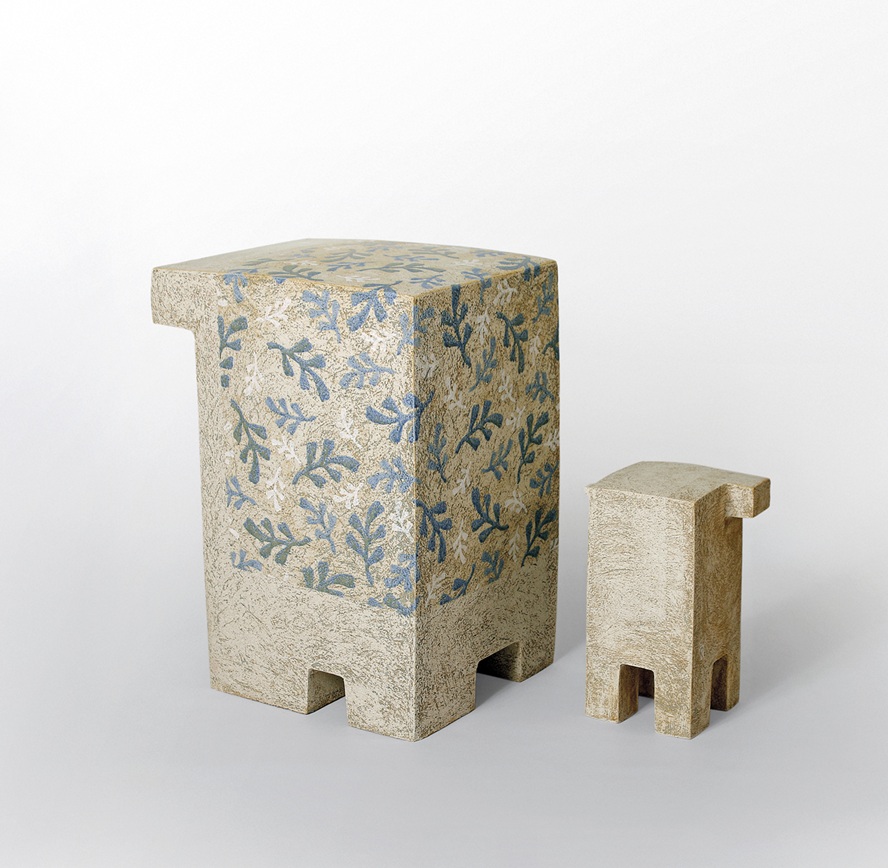

Professional ceramics in Lithuania emerged only in 1931. For almost half a century, ceramics education was based on the authority of a single figure – Liudvikas Strolis (1905-1996). For a long time, an emphasis was placed on folk art stylistics. During the Soviet occupation period, ideological and political content was of particular importance. Ceramics was expected to fulfil the role of design, a field that did not yet exist in Lithuania. It was only at the turn of the 7th and 8th decades that artists gradually began to move away from functionality. A conceptual shift occurred in the 8th decade, when new conceptual solutions began to emerge in the artistic field: ceramics diversified, functionality was abandoned, and ceramicists sought to emphasise materiality and highlight surface qualities. Chamotte clay and matte glazes became especially favoured. Artists of that period were influenced by broader shifts in visual art, arriving from the West via various channels, particularly from Poland. It was during this important period for ceramics that the foundations of the Panevėžys International Ceramics Symposium began to take shape.
| THE FULL TEXT OF THE ARTICLE |
 Każdy fragment ma znaczenie – wywiad z prof. Mirosławem Kocińskim
Sylwetka Władysława Garnika
Maria Słaboń. 40 lat zapisane w szkle
Uwięzione w świetle — Maciej Zaborski
Litofanie i Formy Bio-Logiczne
Między kontrolą a przypadkiem. Katarzyna Krej
Ontologie formy. Dialog ceramiki i malarstwa – wywiad
Elżbieta Piwek-Białoborska (1922–1989). Ceramika – forma – dekoracja
Płynny dialog – zanurzenie i przepływ
Sztuka higieny. Lampy katalityczne
Każdy fragment ma znaczenie – wywiad z prof. Mirosławem Kocińskim
Sylwetka Władysława Garnika
Maria Słaboń. 40 lat zapisane w szkle
Uwięzione w świetle — Maciej Zaborski
Litofanie i Formy Bio-Logiczne
Między kontrolą a przypadkiem. Katarzyna Krej
Ontologie formy. Dialog ceramiki i malarstwa – wywiad
Elżbieta Piwek-Białoborska (1922–1989). Ceramika – forma – dekoracja
Płynny dialog – zanurzenie i przepływ
Sztuka higieny. Lampy katalityczne


